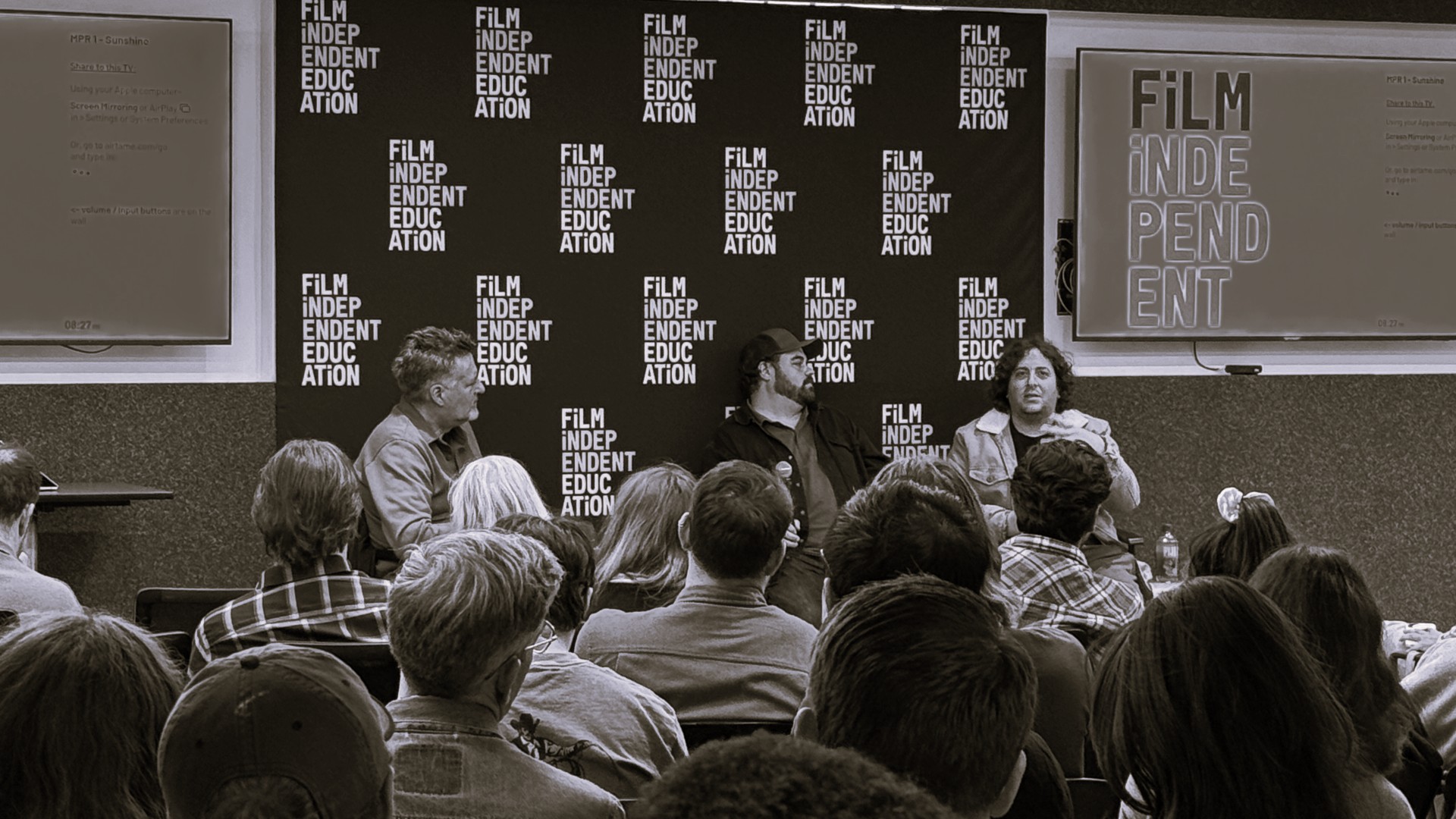
Last week, the HV Arts Hub kicked off a new series of conversations on the future of ultra microbudget filmmaking with our friends at Film Independent. The first installment of NanoWave: The Microbudget Film (r)evolution featured writer/director Joe Burke (Four Dogs, The One Minute Joe Show) and actor/writer Oliver Cooper (Red Oaks, Project X) in person at the Film Independent offices in Los Angeles. In a panel moderated by HieronyVision and HV Arts Hub founder Felix Werner, the filmmaking team offered an inspiring discussion about their sleeper festival hit Burt, which they co-wrote, produced, and now plan to distribute on their own.
More impressive than all that? They made the film for just $7,000 in Southern California.
So how did an AFI-trained director and a working actor come together to make a great movie for crappy used car prices in the post-inflation economy? Burke and Cooper are longtime friends, having grown up together in Ohio. As both found themselves living and working in LA, they collaborated on independent projects together, including a pandemic horror short set in Joshua Tree and a 2013 microbudget film inspired by and co-starring Cooper’s aunt. Somewhere along the way in their creative and personal journeys, they befriended Burton Berger, an aging street musician who’s also the type of colorful character adding richness and depth to the tableaux of LA’s artistic community.
Reality is always stranger than fiction, and the truly fascinating stuff often lies in those liminal spaces between the two. So Burke and Cooper knew they had to make a movie about their friend Burt. In the meantime, they were also both growing disillusioned with the process of telling stories within the Hollywood system. They had this personal story they wanted to tell, inspired by the life of their friend. When Berger was diagnosed with Parkinson’s disease a few years ago, it added a sense of urgency. They had to make this movie soon. And they had to use the resources available to them.
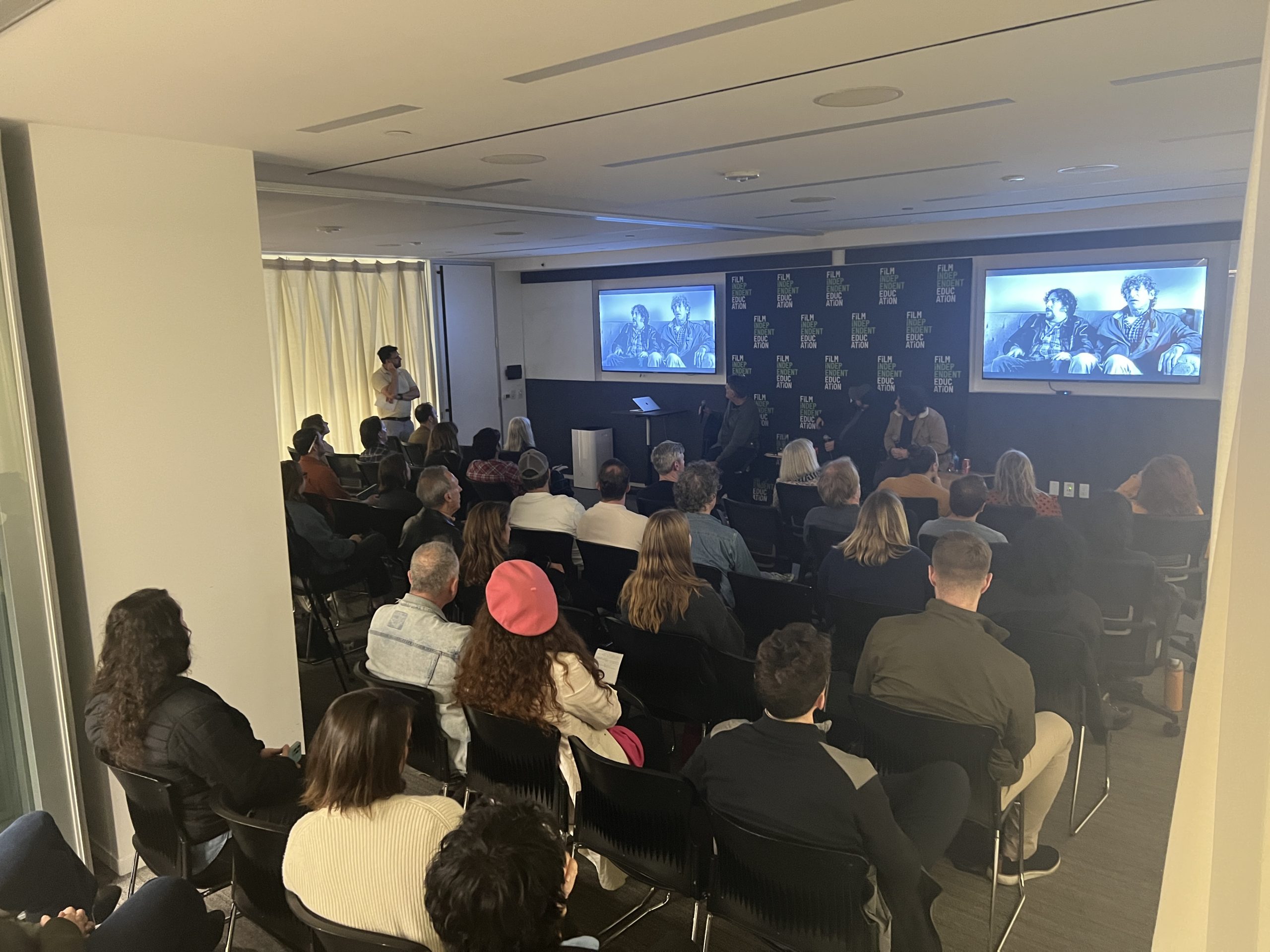
In addition to Burt and his music, these included Steven Levy, who appears as a fictionalized version of himself as Burt’s landlord/roommate; the house where they cohabitate; and any of Burke and Cooper’s friends willing to work on an interesting passion project for much less than their usual quote, including cinematographer Daniel Kenji Levin and sound mixer Rob Spence.
Understanding that non-professional actors might struggle delivering scripted dialogue, Burke and Cooper wrote a detailed 15-page treatment of the story they wanted to tell, with very specific story beats and shot setups but enough character space for the performers to work in the scenes. After filming some rehearsal sequences on location with the main cast and crew, they also made a bold artistic decision: make it a black-and-white movie. While this type of no budget austerity often reflected cost cutting in the days of shooting on film, it adds a different layer to the story of Burt, which blends documentary and dramatic minimalism with elements of neo-noir.
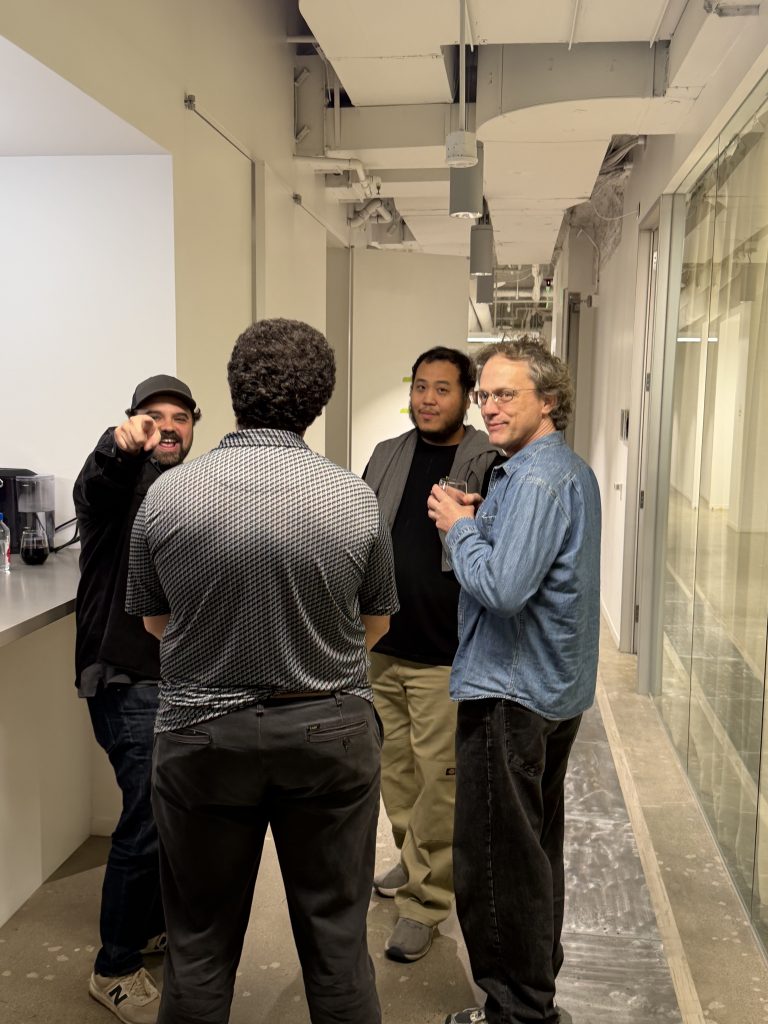
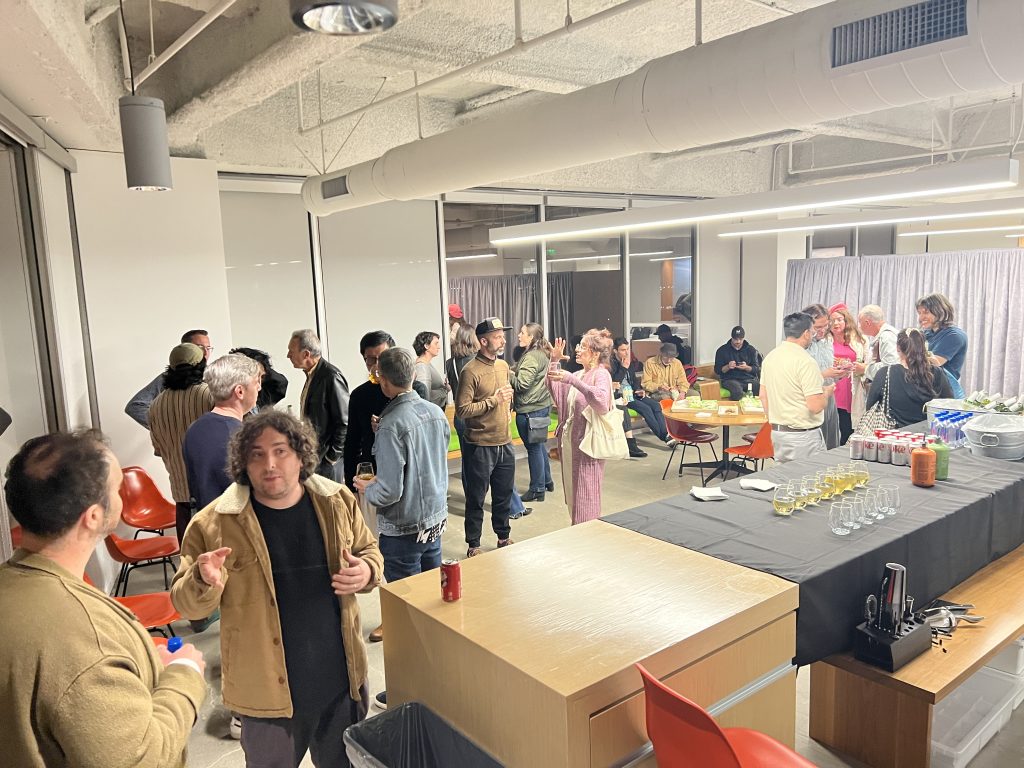
They also took advantage of things—and people—they found along the way. The filmmakers always had stacks of location and cast release forms on hand. The opening scene, for instance, takes place at a café where Berger regularly performs. In a street scene, when one of Berger’s neighborhood friends stopped to say hello, he became a character in a film, a detail that adds depth to the lives of the characters if not the overall story. Similarly, when they needed to rent a mobile home for a day of filming, they cast the eccentric occupant as the landlady of the trailer park.
For Burke and Cooper, this is the only way to make a film: completely on their own terms. While there are limitations on the process—Cooper had to finagle a SAG waiver to appear in a movie he co-wrote and produced—the filmmakers had full creative control over nearly every step of the process. More importantly, they had a meaningful story they wanted to and were able to tell, a feat that is becoming increasingly rare in today’s media landscape. However, for independent artists, this is the only way forward. “Find something personal that only you can do,” Burke advised aspiring microbudget filmmakers in the audience. “There’s so much work to go and do this,” added Cooper, “that it has to be worth it to you.”

SAY HELLO!